
/f/131443/3229x2061/bff1120589/data-skills-for-tsm-online-course-feature.png)
/f/131443/1376x867/d877fde429/online-courses-offer-4for3-feature.png)
/f/131443/2512x1656/98a7710e67/cx-feature.jpg)
/f/131443/640x422/c90e3b081d/research-to-inform-strategy.jpg)
/f/131443/1962x1135/e8f74f1bf6/customer-research-review.png)
TLF Gems Newsletter August 2025
Your monthly CX and insight newsletter from TLF Research
One of the oldest mistakes you can make with advertising is to position your brand on something the customer wants that you simply cannot deliver on.
Mark Ritson
One of my favourite business books of all time is Phil Rosenzweig's "The Halo Effect". In it he argues that most popular business books take an overly reductive approach, reducing complex webs of causation to a neat, single-factor, explanation.
The real world is always more complex than this, and it's our job as researchers to try to understand it. Not only that, it's our job to communicate our understanding to other people in a way that will drive improvement. The answer, it seems to me, is finding the right balance of theory, knowing our data, and understanding the context of the business it needs to be applied to.
That combination of theory, data, and context is where useful recommendations are born.
Thanks for reading,
Stephen
Here are 7 things we think are worth your time this month
 How Differentiation Works
Summary of an interesting study looking at the way differentiation interacts with other brand attributes. Is differentiation the key, or a red herring? This won't settle the argument, but it might help move it towards a more fruitful, nuanced, place. "Differentiation isn’t meaningless. It has real business impacts and can drive penetration, market share, and other things."
Customer Service Sludge
Good article about "sludge" (i.e. deliberately poor customer service) as a tactic organisations use to safeguard profits or discourage customer behaviours they don't like. Needless to say, this is a terrible idea. You might want to ask if it's creeping into your own customer experience? "Ostensibly the goal of customer service is to serve customers. Often enough, its true purpose is to defeat them."

Designing for Vulnerability
Really good example of how small design decisions which understand where customers are can be tremendously powerful. Monzo Bank's app notices if you're on a call, and warns you that it's not them in case you're falling victim to a phone scammer. "It’s a reminder that great product teams don’t chase clever features. They focus on understanding real user problems and solving them in the smallest, most meaningful way."
Data Storytelling
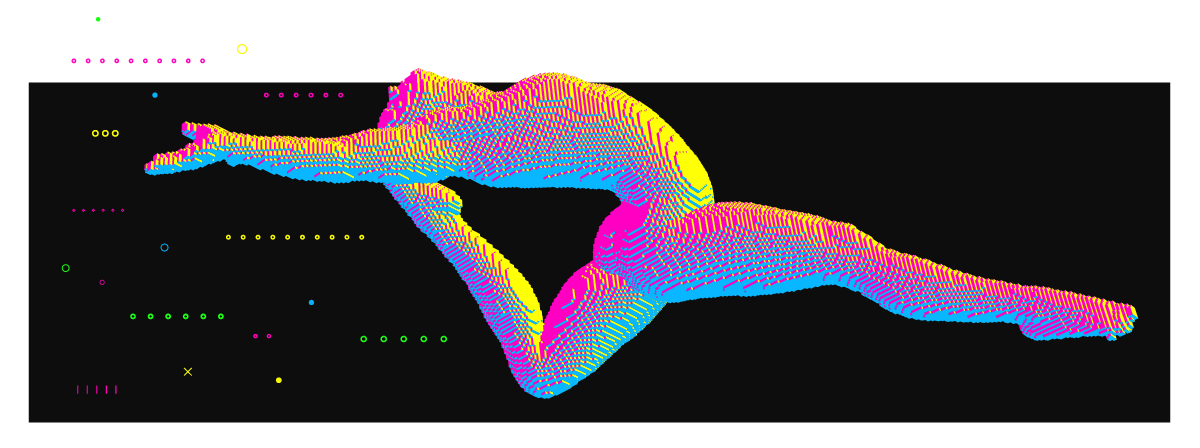
The Processing Foundation has announced its 2025 Data Storytelling Fellows. Some really beautiful and inspiring work here. "This year, we're exploring Data Storytelling by pushing the boundaries of creative coding to uncover hidden narratives through sound, theater, dance, and documentary work."

How To Surf The Web
Some of you are probably too young to remember this, but there was a time when going online meant surfing rather than scrolling. This piece makes a passionate case that there is still joy and fascination to be found this way, if you can remember how! "This internet, of the late 90s to early 2000s, offered a completely different sensory and emotional experience than today’s...Surfing through this structure was characterized [by] feelings of wonder and abundance."

AI Is Not Doing Its Job
Excellent puncturing of much of the AI hype-train from Gartner's head of AI research. Hard to disagree that there's a lot of tail-wagging-the-dog about the current rush to apply GenAI to everything, rather than starting with problems that employees actually have. "This is a software engineering problem. You need people who understand you decompose systems, when they can communicate, the degree to which they communicate, the different autonomy levels that you give within an agent."

What I'm Reading: Opening Skinner's Box
In the middle of this one, and I'd give it a cautious recommendation. If you're interested in psychology you'll know about many of the classic (and often controversial) experiments covered, but the author does a great job of explaining the background and modern implications of each. Her personal reflections sometimes become a bit much, but the explanations are really good. "My hope is that some of these experiments will be more fully taken in by readers now that they have been translated into narrative form."
You may also be interested in
Webinar
/f/131443/1000x1000/545bd8ec8e/the-cx-landscape-2025-thumbnail.png)
The Customer Experience Landscape 2025 - CX Trends Webinar
Each year we give an update on latest thinking in Customer Experience and Insight. What are the trends you need to be aware of? We'll break down what's happening, arm you with facts and figures to support your strategy, and offer recommendations for what to prioritise in the yea...
/f/131443/1385x1385/bb386686d3/customer-research-thumbnail.png)
Customer research
We are TLF, a customer experience research company that has been designing tailored customer experience and market research programmes for over 20 years.
Downloads
/f/131443/2250x2250/09cd998c36/cx-thumbnail.jpg)
CX Tools and Templates
Our CX tools and templates have been created to help with some of the biggest challenges we know organisations face when it comes to using customer insight to drive improvements for customers. From Customer Journey Mapping, User Stories and Personas, to CX Strategy and Action Pl...
Book Review
/f/131443/500x500/2006d467e1/researchbooklist500x500.png)
A CX Research Reading List
We're often asked for recommendations on books about research and insight. Here are 12 that we think are great (and yes, we wrote 2 of them!).