
:format(webp)/f/131443/1626x1033/8734377e84/cx-updates-feature-v2.png)
:format(webp)/f/131443/716x454/1ca638056c/full-year-tsm-benchmarking-2025-26-feature.png)
:format(webp)/f/131443/1510x964/cec1129e05/index-cs-q3-2026-feature.png)
:format(webp)/f/131443/1962x1135/e8f74f1bf6/customer-research-review.png)
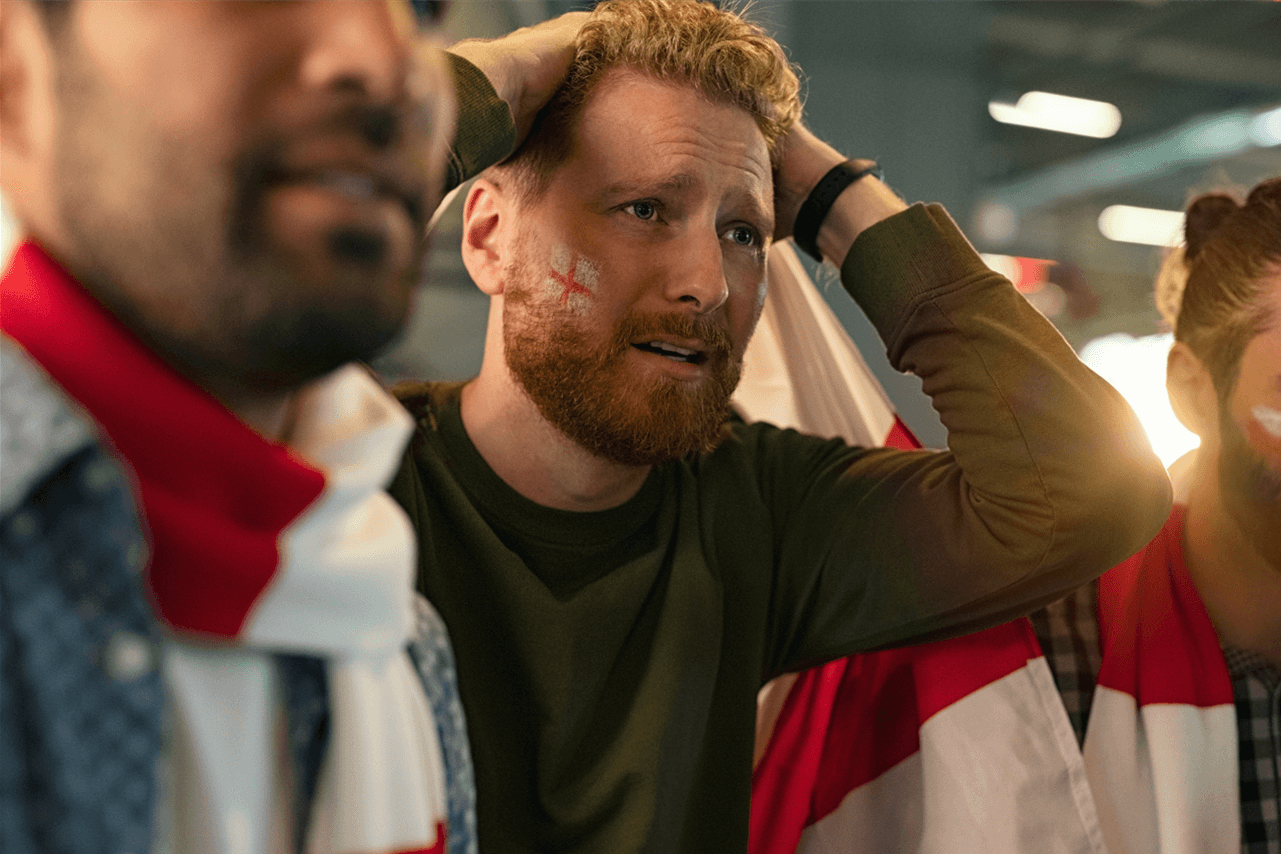
World Cup 2026: new UK research reveals a nation half-engaged
With the tournament due to start next week, a new consumer survey reveals a nation that says it cares about the World Cup - but can’t quite tell you where it’s being held.
It is, according to FIFA, the greatest sporting event in history. A 48-team, 104-match, 37-day mega-tournament spread across three countries and 16 cities. And yet, if the findings of our survey conducted in May 2026 on the TLF Panel are anything to go by, the UK is approaching the 2026 FIFA World Cup with something closer to vague interest rather than genuine passion.
Just over half of UK consumers (51%) say they are planning to follow the tournament. On paper, that sounds encouraging. But dig beneath the headline figure, and the picture becomes considerably less flattering.
The Headline Numbers
51% of UK consumers say they intend to follow World Cup 2026
55% of those followers correctly identified USA, Canada & Mexico as the host nations
Nearly two thirds of men (65%) say they plan to follow the tournament
The 45-54 age group is most likely to be following the World Cup (56%)
Meanwhile, the youngest adults surveyed - those aged 18 to 24 - are among the least likely to follow, at just 47%.
The football gender gap still exists
There is a significant difference in male and female engagement. Nearly two thirds of men (65%) say they plan to follow the tournament. Among women, that figure falls to just 38%. That is a 27-percentage-point gap, and it will give broadcasters and brands pause for thought as they plan their coverage strategies for the summer.
While women’s football has made enormous strides in recent years - particularly after the Lionesses’ Euro 2022 triumph - the survey suggests that tournament football remains, for now, a predominantly male preoccupation. Whether the expanded format and the novelty of a North American setting changes that over the course of the tournament remains to be seen.
Scotland leads the home nations - just
Breaking the figures down by nation reveals some nuance. Scotland tops the home nations with 56% of consumers planning to follow - perhaps unsurprising given that the Scottish national team has qualified for a major tournament for the second consecutive time, a feat that would have felt unthinkable a decade ago. England and Northern Ireland both sit at 50%, broadly in line with the UK average. Wales, however, trails the pack at 39% - a figure that likely reflects the fact that the Welsh national team did not qualify for the tournament.
The Welsh figure is worth dwelling on. It is a reminder that national qualification has an outsized effect on public engagement with football tournaments, and that the expanding 48-team format - while bringing more nations into the fold globally - does not automatically translate into higher domestic interest for nations on the outside looking in.
Middle-aged enthusiasm, youthful indifference
The 45-54 age group is most likely to be following the World Cup, at 56% - a cohort for whom the tournament has been a fixture of their adult lives since the late 1980s and 1990s. Meanwhile, the youngest adults surveyed - those aged 18 to 24 - are among the least likely to follow, at just 47%.
The relative lack of enthusiasm among 18-24 year olds should concern football’s governing bodies and commercial partners in equal measure. This is the demographic that FIFA president Gianni Infantino claimed the expanded 2026 format would bring into the fold - “ushering in a new generation of soccer fans,” as he put it. If the UK data is any guide, that ambition has some way to go. Young consumers are more fragmented in their media habits, less wedded to live broadcast events, and arguably more discriminating about how they spend their attention across a 37-day tournament.
Half the followers, half the knowledge
Of those who are planning to watch, only around half could correctly name all three host nations. Just 55% of self-declared followers identified the United States, Canada, and Mexico as co-hosts. More than a quarter (27%) believed only the United States was hosting.
Over a quarter of British fans planning to watch think the World Cup is happening exclusively in the USA. Canada and Mexico, it seems, didn’t get the memo through.
It is a revealing snapshot of a public that has absorbed the tournament’s existence without particularly engaging with its details - and it raises a genuine question about whether the novelty of a tri-nation host was ever properly communicated, or whether it simply got lost in the noise of an already saturated sporting calendar.
Late nights, a bloated format, and a charged backdrop
The survey findings sit against a backdrop that does little to stoke enthusiasm. With most UK kick-off times falling between 9pm and 2am BST - and some West Coast US matches finishing as late as 5am - following the tournament requires a level of dedication. The expanded 104-match schedule, which drew criticism from La Liga and players’ unions for its impact on the football calendar, stretches across nearly six weeks. And the political atmosphere surrounding the US leg of the tournament - with international concerns about immigration enforcement and the relationship between FIFA and the Trump administration drawing scrutiny - adds an uncomfortable dimension that organisers would rather avoid.
None of this means the football will be bad. England face Croatia, Ghana and Panama in a manageable group; Scotland have the thrilling, if daunting, prospect of Brazil in Miami. All 104 matches are free-to-air on BBC and ITV. But the survey tells its own quiet story: for just under half of the UK, the World Cup this summer will be something that happens in the background - something to check the scores on in the morning, rather than stay up for.
About the Article
This article is based on a survey carried out in May 2026 of 2,387 UK adults. Respondents were sampled across age, gender, and region to reflect the adult population of the United Kingdom. Additional references: Sky Sports, TNT Sports, La Liga/BBC Sport, Reuters.
The survey was conducted on our proprietary research panel - the TLF Panel - a carefully maintained, regularly refreshed community of engaged UK consumers, available for quantitative surveys, segmentation studies, brand tracking, and bespoke insight projects.
Our panel enables PR and marketing agencies to:
Generate exclusive, ownable data for media campaigns and thought leadership
Conduct rapid-turnaround surveys to capture the public mood on breaking topics
Segment findings by age, gender, region, household income, and more
Commission bespoke studies tailored to client briefs and campaign themes
Access data that journalists want - surprising, human, and statistically robust
Looking to commission your own research?
If you're an agency looking to give your clients an edge with robust consumer insight, we'd love to talk. Get in touch to find out how our panel can power your next campaign.
You might also be interested in...
:format(webp)/f/131443/730x730/0dfa36d882/panel-research-thumbnail.png)
Panel Research
Our online research panel gives you access to the views of over 60,000 UK consumers. Whether you’re looking for quick facts and figures, the answer to a specific set of questions or to undertake more in-depth market research the TLF Panel could be what you need.
News & Opinion
:format(webp)/f/131443/800x800/1869bbe740/sidehustles-research-thumbnail.png)
The Rise of Side Hustles: How More People Are Earning Extra Income
More and more people are turning to side hustles as a way to supplement their income. According to recent research, just over 20% of people currently have a side hustle, with younger generations leading the trend. The age group of 18-24 is the most active in this space, with 35% ...
:format(webp)/f/131443/507x507/d16b7c92f6/tlf-panel-ratecard-thumbnail-2026.png)
TLF Panel - Pricing Rate Card
We keep our standard rate card nice and simple, our pricing is based on the number of questions and number of responses required from all UK consumers. Introducing quotas to target specific audiences and demographic profiles will need to be costed on a project by project basis.
Downloads
:format(webp)/f/131443/955x954/c822568686/index-cs-report-q1-26-thumbnail.png)
The Index of Consumer Sentiment Quarter 1 2026
With another quarter of growth, it seems safe to say that UK consumer sentiment is showing both a short and long-term upward trend. Consumers are still cautious, but there is a building sense of optimism about the future. If this trend continues 2026 may be a very positive year ...